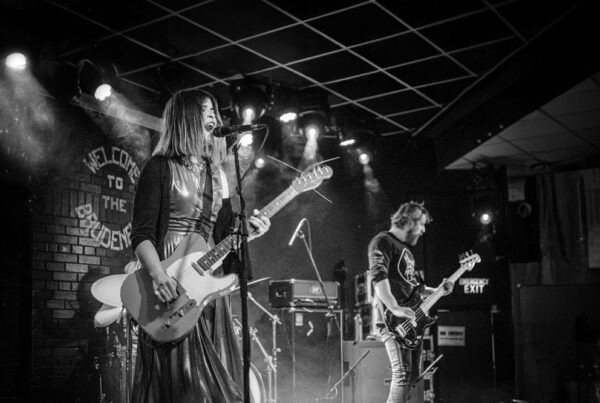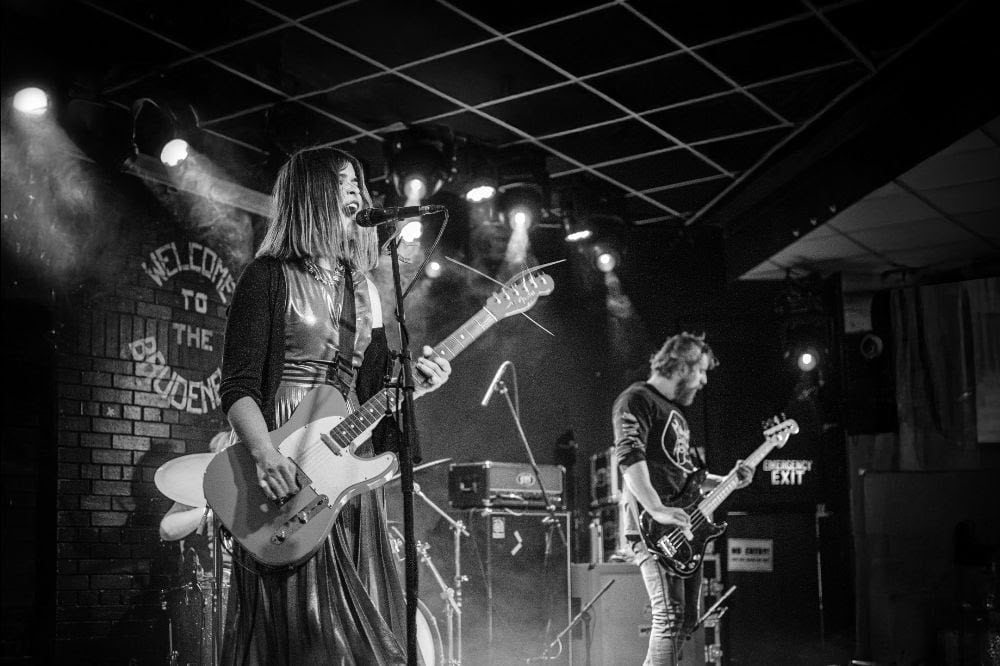
WINONA FIGHTER unleash new single ‘BOMBS AWAY’

Finnen DartMay 8, 2026
Beyond the Rainbow: Understanding the Transgender Community’s Vital Role in LGBTQ Culture In the lexicon of modern civil rights, few acronyms carry as much weight—or as much complexity—as LGBTQ+. The letters represent a coalition of identities united by the struggle against heteronormativity and cisnormativity. Yet, within this vibrant tapestry, the "T" (Transgender) has often occupied a unique and sometimes contested space. For decades, outsiders have viewed the LGBTQ+ community as a monolith. However, to understand the movement’s past, present, and future, one must look specifically at the transgender community. They are not merely a subset of gay culture; rather, transgender individuals and their fight for authenticity have fundamentally shaped the very definition of queer identity. This article explores the deep intersection, historical symbiosis, cultural contributions, and ongoing evolution of the transgender community within the broader LGBTQ culture. Part I: A Shared History, A Different Struggle To separate the trans experience from the broader queer movement is to misunderstand history. Before the medical establishment coined terms like "transsexual" in the mid-20th century, individuals who我们今天 would identify as trans were often lumped in with gay men and lesbians under the umbrella of "sexual inversion." The Stonewall Nexus The most significant touchstone of LGBTQ culture—the 1969 Stonewall Riots—was not led by the assimilationist gay men of the Mattachine Society, but by the most marginalized elements of the village: drag queens, butch lesbians, and transgender sex workers. Figures like Marsha P. Johnson (a self-identified drag queen and trans activist) and Sylvia Rivera (a Latina trans woman) were on the front lines. For decades, mainstream gay history downplayed their trans identity, often labeling them as "gay drag queens." Yet, Rivera and Johnson founded STAR (Street Transvestite Action Revolutionaries) , the first organization in the U.S. led by and for trans people. This duality—fighting alongside gay people but having to carve out distinct spaces for trans-specific needs (housing, medical care, police violence)—set the template for the next fifty years. Part II: The Intersection of Culture and Identity While gay culture traditionally centered on sexual orientation (who you go to bed with), transgender culture centers on gender identity (who you go to bed as ). Despite this distinction, these streams converge in the LGBTQ river. The Evolution of Drag One of the greatest misunderstandings between cisgender (non-trans) LGBTQ people and the trans community involves drag culture . Drag performance is an art form of gender exaggeration, typically performed by cisgender gay men. While the trans community emerged partly from the ballroom scene (as depicted in Paris is Burning ), it is crucial to note that being trans is not a performance, while drag is. However, the overlap is where culture thrives. Many trans icons, including Laverne Cox and Monica Beverly Hillz, began their public journeys in drag. The ballroom culture of the 1980s and 90s created safe havens for Black and Latinx trans women who were rejected by both their biological families and mainstream gay society. Categories like "Realness" (passing as cisgender/straight) directly influenced modern fashion, slang (e.g., "shade," "werk"), and pop music. Language as a Weapon and a Shield LGBTQ culture has always been a linguistic innovator, but the trans community has recently accelerated this. The push for pronouns (he/him, she/her, they/them) has moved from activist circles to corporate HR departments. Terms like "cisgender" (not trans) and "gender dysphoria" (distress from gender mismatch) are now common parlance. This linguistic shift highlights a cultural tension: some older gay cisgender men feel that the focus on gender identity has "taken over" the gay rights movement. Conversely, trans activists argue that without fighting for the right to exist outside the binary, the gay movement’s goal of "being true to yourself" is hollow. Part III: The Current Cultural Landscape In the 2020s, the transgender community stands as the vanguard of LGBTQ culture. While marriage equality was the goal of the 2010s, existential visibility is the goal of today. Media Representation Transgender representation in media has exploded, reshaping LGBTQ culture from the inside out. Shows like Pose (FX), Disclosure (Netflix), and I Am Jazz have moved trans narratives from tragedy porn to empowered storytelling. Mainstream pop culture has embraced trans artists like Kim Petras , Anohni , and Ethel Cain . Yet, this visibility is a double-edged sword. The trans community is currently the primary target of anti-LGBTQ legislation in the United States and abroad—bans on gender-affirming care, sports participation, and bathroom access. Consequently, LGBTQ culture has had to pivot from "celebration mode" to "defense mode." Pride parades, once criticized by trans activists as being too commercialized, have returned to their protest roots, with "Trans Liberation" blocks marching at the front. The Rise of Non-Binary Identity Perhaps the most significant cultural shift driven by the trans community is the mainstreaming of non-binary identities. Figures like Sam Smith, Demi Lovato, and Janelle Monáe have shifted the cultural understanding of gender from a binary switch (man/woman) to a spectrum. This has revolutionized LGBTQ culture’s internal dynamics. Gay bars, once strictly divided by "butch/femme" or "top/bottom," are now reckoning with gender-neutral bathrooms and language. The "LGBTQ community" is increasingly seen as a "queer ecosystem" where someone can be a lesbian, use they/them pronouns, and have a trans masculine partner. This fluidity is the trans community's greatest legacy to the broader culture. Part IV: Intersectionality and Friction No community is a monolith, and the relationship between the trans community and the rest of the LGBTQ umbrella is not without friction. The LGB Drop the T? Movement A small but vocal minority of cisgender gay and lesbian people have attempted to form "LGB" groups, arguing that the "T" is separate. They claim that being trans is a matter of body identity, not sexual orientation. However, mainstream LGBTQ organizations (GLAAD, HRC, The Trevor Project) firmly reject this, citing that our oppressors do not separate us. When a trans woman is attacked for holding hands with a cis woman, it is homophobia and transphobia combined. Healthcare and Aging Within LGBTQ culture, the trans community faces unique challenges regarding aging. While a gay man might worry about losing his looks, a trans elder worries about finding a nursing home that won't refuse their hormone medication or misgender them. Consequently, trans activists have pushed the broader LGBTQ culture to focus less on nightlife and more on long-term care, homelessness (40% of homeless youth are LGBTQ, and a disproportionate number of those are trans), and employment discrimination. Part V: The Future of the Rainbow What does the future hold for the transgender community within LGBTQ culture? We are witnessing a generational shift. Gen Z does not view "coming out" as the singular event it was for previous generations. For many young people, gender exploration is a normalized part of adolescence. This has led to a tension between "LGBT culture" as a safe haven (born of trauma) and "LGBT culture" as a joyful, everyday identity. The trans community is pushing the culture toward post-identity liberation . The goal is not just tolerance but euphoria —the joy a trans person feels when they see themselves reflected in the world. As the political landscape becomes more hostile (with dozens of anti-trans bills passed annually), the bond between the transgender community and the broader LGBTQ culture is forged tighter. The "T" is not a new letter; it is the backbone that has always been there, holding up the rainbow. Conclusion: The Rainbow is Incomplete Without the T To look at LGBTQ culture without focusing on the transgender community is to see a distorted image. Transgender individuals—particularly trans women of color—threw the first bricks at Stonewall. Trans artists coined the slang of gay liberation. Trans thinkers are currently redefining what it means to be human in the 21st century. The struggles are different. A gay man might fight for the right to marry; a trans woman fights for the right to use a public restroom without being arrested. But the goal is the same: the right to exist authentically. As the acronyms evolve (LGBTQIA+), and as the culture wars rage on, one truth remains immutable: the transgender community is not a footnote in LGBTQ history. It is the engine. By supporting trans voices—listening to their specific needs, fighting their specific fights, and celebrating their specific joy—the LGBTQ culture as a whole moves closer to its founding promise: a world where everyone is free to be themselves, no exceptions.
For more information on how to support transgender individuals, consider donating to The Trevor Project, the National Center for Transgender Equality, or local trans-led mutual aid funds.
Overview of Karina Misaki Karina Misaki, also known as Shiratori, is a figure who has garnered attention within certain circles, particularly in Japan. Her professional or public persona might intersect with adult entertainment, a sector where Japan has a notably vibrant and diverse industry. Background Karina Misaki, with her professional alias or associated name Shiratori, has been active in an industry that often blends entertainment with adult content. Japan is known for its complex and multifaceted adult entertainment sector, which includes various genres and formats such as AV (adult video), manga, and more. Recent Developments: "8 New" The mention of "8 new" in your query could refer to recent developments or releases associated with Karina Misaki/Shiratori. This could include new AV releases, public appearances, or other professional projects she has been involved in. Given the fast-paced nature of the entertainment industry, professionals like Karina often engage in multiple projects simultaneously. Cultural and Social Context In Japan, the adult entertainment industry operates within a unique cultural and legal framework. The industry is significant in size and has a considerable following both domestically and internationally. However, it also operates under strict regulations designed to protect those involved. Conclusion The topic of Karina Misaki/Shiratori and recent "8 new" developments reflects the dynamic and multifaceted nature of Japan's entertainment sectors. When discussing individuals within these industries, it's crucial to approach the topic with an understanding of the cultural, legal, and personal contexts involved. If you're looking for specific information on Karina Misaki/Shiratori's work or recent projects, I recommend checking reputable sources or platforms that specialize in Japanese entertainment news. They might offer more detailed and up-to-date information.
Informative Report: Transgender Community and LGBTQ Culture Introduction The transgender community and LGBTQ (Lesbian, Gay, Bisexual, Transgender, and Queer) culture have gained significant attention in recent years. The community has faced numerous challenges, including social stigma, discrimination, and marginalization. This report aims to provide an overview of the transgender community and LGBTQ culture, highlighting their history, struggles, and achievements. History of the Transgender Community and LGBTQ Culture The modern LGBTQ movement began in the 1960s, with the Stonewall riots in New York City marking a pivotal moment in the fight for LGBTQ rights. The transgender community, in particular, has a rich history, with pioneers like Marsha P. Johnson and Sylvia Rivera playing key roles in the Stonewall uprising. The 1980s saw the emergence of the AIDS epidemic, which disproportionately affected the LGBTQ community and led to increased activism and advocacy. Challenges Faced by the Transgender Community The transgender community faces numerous challenges, including: shemale japan karina misaki shiratori 8 new
Discrimination : Transgender individuals face widespread discrimination in employment, housing, healthcare, and education. Violence : Transgender individuals, particularly trans women of color, are disproportionately affected by violence, including hate crimes and police brutality. Mental Health : Transgender individuals often experience high rates of depression, anxiety, and suicidal ideation due to social stigma and marginalization. Healthcare Disparities : Transgender individuals often face barriers to accessing healthcare, including hormone therapy and transition-related care.
LGBTQ Culture and Identity LGBTQ culture is diverse and multifaceted, encompassing various identities, expressions, and experiences. Some key aspects of LGBTQ culture include:
Identity : LGBTQ individuals often have unique experiences and perspectives shaped by their identities, including lesbian, gay, bisexual, transgender, queer, and non-binary. Community : LGBTQ individuals often find community and support through online platforms, social organizations, and cultural events. Expression : LGBTQ culture is characterized by diverse forms of expression, including art, music, fashion, and performance. For decades, outsiders have viewed the LGBTQ+ community
Achievements and Progress Despite the challenges faced by the transgender community and LGBTQ culture, there have been significant achievements and progress in recent years, including:
Marriage Equality : The legalization of same-sex marriage in many countries, including the United States, has marked a significant milestone for LGBTQ rights. Increased Representation : LGBTQ individuals are increasingly represented in media, politics, and other fields, promoting visibility and understanding. Advocacy and Activism : Organizations and individuals continue to advocate for LGBTQ rights, pushing for policy changes and social acceptance.
Conclusion The transgender community and LGBTQ culture are complex and multifaceted, encompassing diverse experiences, identities, and expressions. While significant challenges persist, the community has made notable progress in recent years. Ongoing advocacy, education, and support are essential for promoting understanding, acceptance, and inclusivity. Recommendations including anti-discrimination laws and healthcare access.
Increased Education and Awareness : Educate individuals about LGBTQ culture and the challenges faced by the transgender community. Policy Changes : Advocate for policy changes that promote LGBTQ rights, including anti-discrimination laws and healthcare access. Community Support : Provide support and resources for LGBTQ individuals, including mental health services and community programs.
References



© Soundsphere Magazine. All Rights Reserved